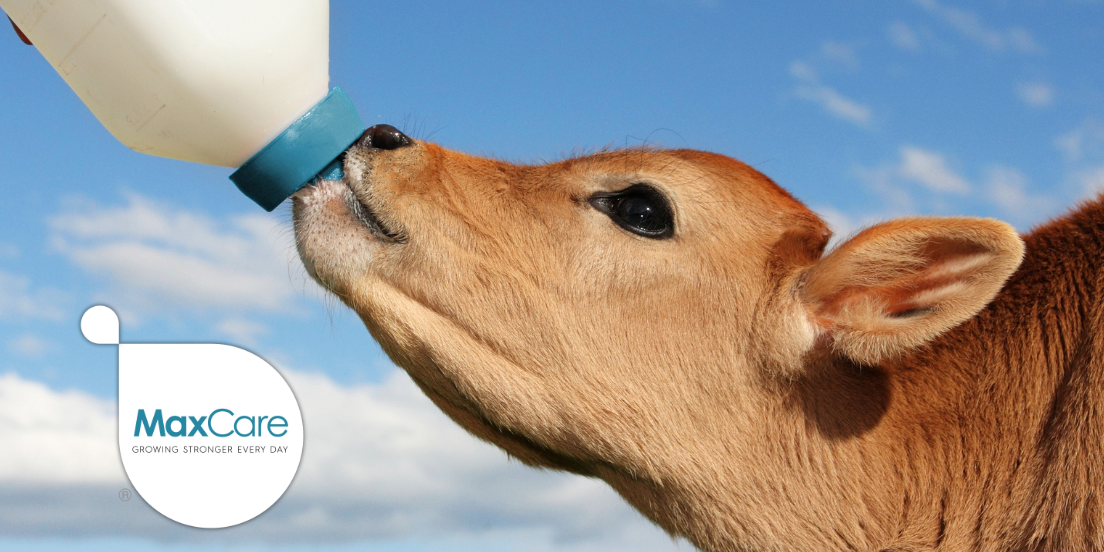
Raising calves is an investment in the future of a dairy business. Every calf represents the potential next generation of productive cows, and the nutrition they receive in their first weeks of life can influence their growth, health and future performance.
Yet when choosing a calf milk replacer, it’s easy to focus on the price per bag. But is a cheaper product really saving money if it comes at the expense of calf growth and development?
The bigger question is not simply what it costs to feed a calf, but what return that investment delivers.
Early nutrition makes a difference
The first two months of a calf’s life are an important window for growth and development. Providing adequate nutrition during this period supports muscle and organ development, immune function and healthy growth.
Research has shown a strong relationship between early growth and future milk production. Calves achieving growth rates of around 1kg per day before weaning have been shown to produce approximately 1,500 litres more milk in their first lactation than slower-growing calves.
Other research comparing feeding levels of 5 and 10 litres of milk replacer daily found that higher-fed calves achieved greater early growth and produced an additional 1,269 litres of milk during their first lactation.
Nutrition during the early stages of life can influence productivity long after a calf leaves the rearing shed.
Consistency matters on a busy farm
If there is one thing calves thrive on, it is consistency.
A consistent feeding routine, temperature, volume and nutritional intake can help reduce stress and support healthy growth. Young calves are particularly sensitive to change, so unnecessary variation can create challenges.
The same applies to the milk replacer itself. Knowing the next bag will perform like the last one is a crucial part of the feeding program.
Mixability is part of that equation. Powder that mixes differently from one batch to the next, leaves sediment in the feeder or does not remain suspended can make an already busy job more difficult.
At MaxCare, every batch is formulated to the same nutritional specifications and quality standards. Batches are tested against nutritional and quality specifications, including nutrient levels, mixability and curd formation.
Healthy calves make economic sense
Growth is only part of the equation. Good nutrition also helps support a developing immune system and gives calves the nutritional foundation to cope with the challenges of early life.
When calves become sick, the costs quickly add up. Veterinary treatment, additional labour, slower growth and potential long-term production impacts can all affect the economics of rearing.
Raising a healthy calf is estimated to cost around $400, while illness can increase rearing costs by 25–50%.
Investing in appropriate nutrition and good calf management from the beginning can help reduce the risk of costly setbacks.
Looking beyond the price per bag
Consider the potential financial return.
If improved early growth contributes to an additional 1,200 litres of milk during a cow’s first lactation, at a milk price of $0.85 per litre, that’s approximately $1,020 in additional milk revenue.
While actual returns depend on feeding costs, genetics, health and farm management, it demonstrates why the lowest-cost feeding program isn’t necessarily the most economical over the lifetime of the animal.
Where MaxCare fits in
MaxCare calf milk replacers are formulated with quality dairy proteins, energy, vitamins and minerals to support healthy growth and development.
Digestibility is also important. The dairy ingredients in MaxCare formulations support firm curd formation in the abomasum, helping regulate nutrient release during digestion and supporting efficient nutrient utilisation.
Depending on the formulation, functional ingredients such as acidifiers, prebiotics, probiotics and postbiotics help support digestive health and a balanced gut environment. Vitamins and minerals contribute to immune function, bone development and overall health, while selected formulations also include coccidiosis control technology.
Together, these nutritional components help support healthy digestion, consistent growth and a successful transition through weaning.
Invest in the calf, not just the feed
Successful calf rearing is about more than keeping feed costs down. It’s about developing healthy, well-grown animals with the potential to become productive members of the herd.
Milk replacer is one part of that investment, alongside good colostrum management, hygiene, housing and feeding practices.
When comparing products, look beyond the price per bag. Consider the quality of nutrition, calf growth, health, feeding efficiency and the potential return over the animal’s lifetime.
Because the real value of calf nutrition isn’t just what it costs today. It’s what it can contribute to your herd tomorrow.
MaxCare’s nutrition experts can advise on the most suitable feeding plan for your infant animals. Contact us at sales@maxumanimal.com